
The best site to get your Nigerian News, Latest News, Breaking News & Trending. From Politics, Entertainment, Sport, Education and Health.
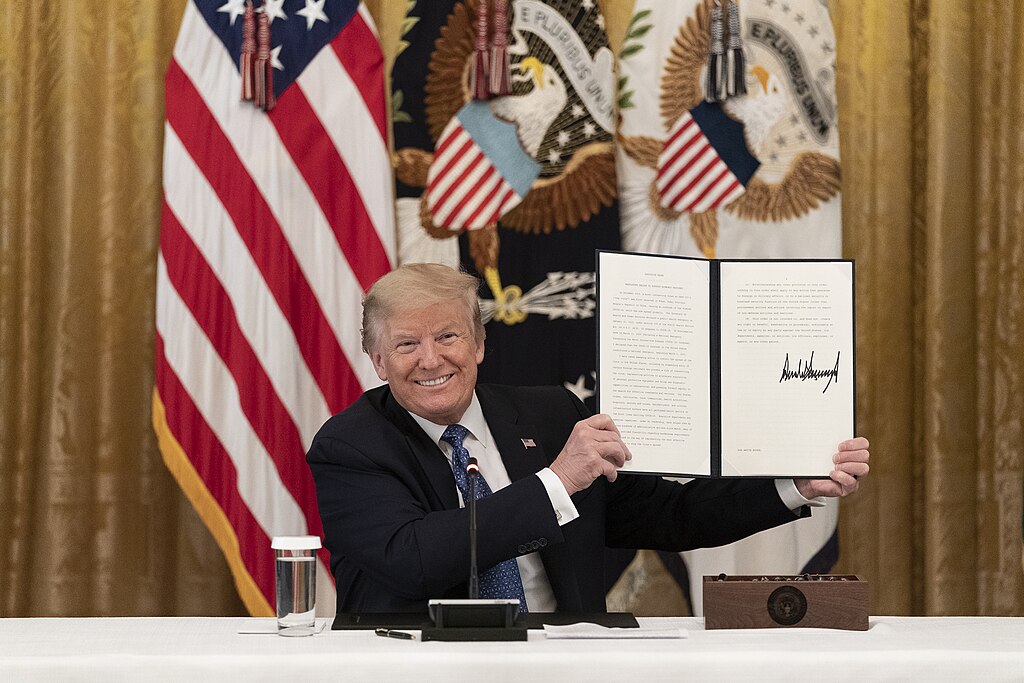
U.S. President Donald Trump has once again ignited international uproar, declaring at a Cabinet meeting on December 2, 2025: “I don’t want Somalis in our country.” The sweeping statement — part of a broader diatribe directed at Somali immigrants — described the Somali community as “garbage,” asserted they “contribute nothing,” and urged them to return to Somalia. The remarks have sparked fierce backlash from civil-rights advocates, immigrant communities, and world leaders alike.
During what was billed as a routine Cabinet session, Trump unleashed a harsh condemnation of Somali immigrants broadly. He explained his stance bluntly: the United States is “going the wrong way” if it continues to admit immigrants he labels as harmful. He characterized Somalia as “barely a country,” accused Somalis of relying on welfare, and said their homeland “stinks.” He further attacked Somali-American political figures, calling them “garbage,” and repeated claims tying the Somali community to fraud and anti-social behaviour.
His rhetoric extends beyond individual criticism — it essentially paints an entire ethnicity as unwelcome. Trump made no public distinction between lawful residents, refugees, American citizens of Somali descent, or undocumented immigrants.
Unsurprisingly, the impact was swift and widespread. Somali-Americans, especially in states like Minnesota — home to the largest Somali diaspora in the U.S. — reported growing fear and concern over possible deportations or profiling. Community leaders described the remarks as racist and dehumanising, warning they risk legitimising racial hatred and discrimination.
Local officials in Minneapolis and St. Paul condemned any potential enforcement campaign targeting Somalis alone, insisting that civil-rights protections must be upheld. Meanwhile, global reactions poured in: some international leaders and human-rights groups called the president’s language provocative and dangerous, cautioning against the rising tide of xenophobia.
This moment marks more than a harsh statement — it threatens to reshape how immigrant communities are perceived and treated in the United States. For many Somali-Americans, the message is chilling: even lawful immigrants and citizens may feel unwelcome.
Immigration experts are warning of possible policy shifts — including increased deportations, reductions of protections for refugees, and stricter asylum rules — especially for people from countries already under higher scrutiny.
More broadly, the rhetoric challenges core American ideals of diversity, inclusion, and equal opportunity. Labeling entire communities as “undesirable” risks fostering intolerance, injustice, and societal divisions.
As outrage spreads, many are calling for a national reckoning. Civil-rights organisations and immigrant-advocacy groups are mobilising legal challenges; lawmakers in states with large Somali populations are pledging to defend citizens’ rights.
Simultaneously, the global community watches with concern. This development could influence how immigrant communities worldwide are treated and deepen distrust between nations.
Whether this marks a turning point in U.S. immigration policy — or becomes another headline in a cycle of inflammatory rhetoric — one thing is clear: the debate over who belongs in America is now front and centre, reshaping identity, justice, and humanity in profound ways.
 English