
The best site to get your Nigerian News, Latest News, Breaking News & Trending. From Politics, Entertainment, Sport, Education and Health.
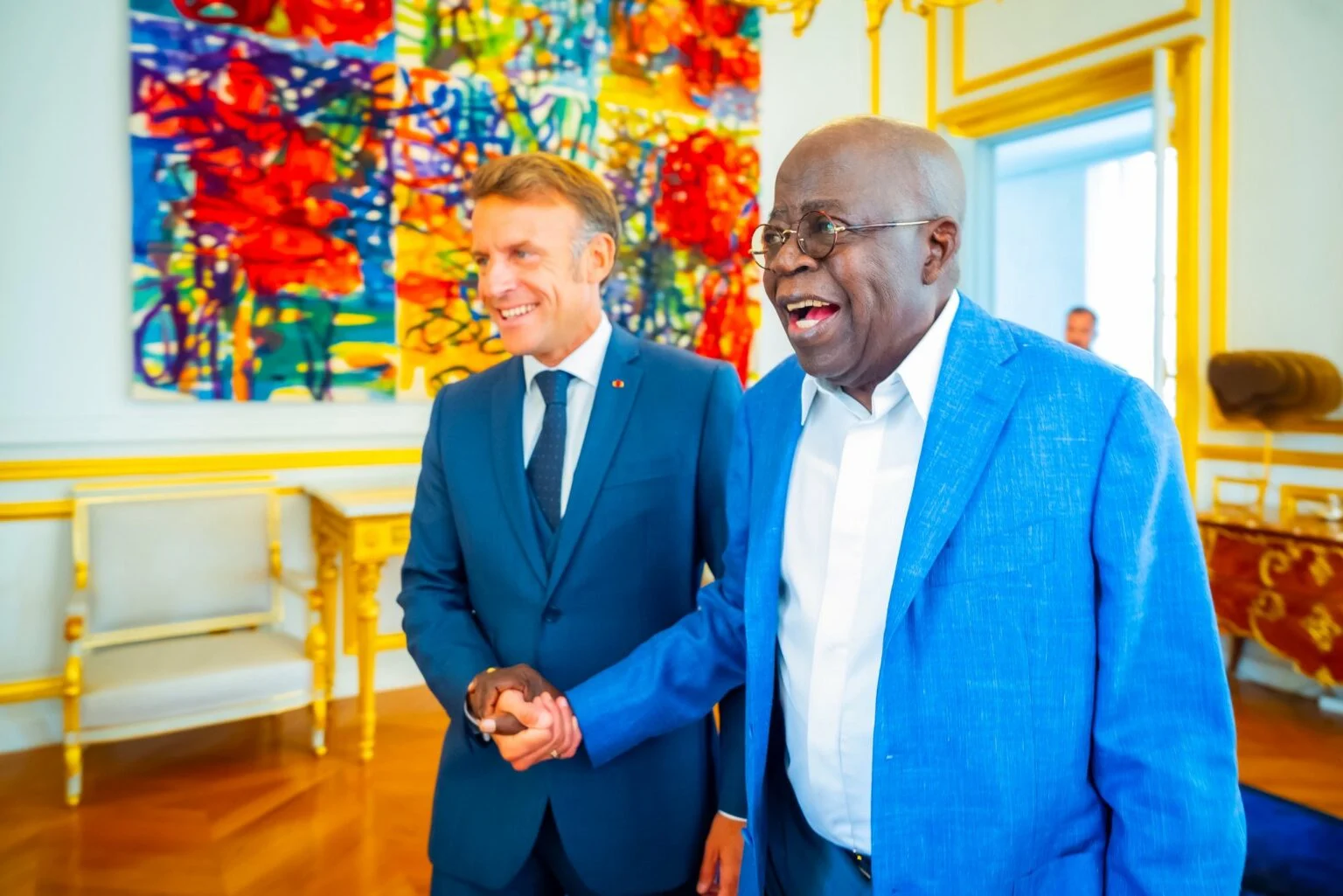
Nigeria’s escalating security challenges have drawn increased international attention, prompting high-level discussions between President Bola Tinubu and French President Emmanuel Macron, as well as multiple engagements with U.S. government officials.
President Macron, in a message shared on Sunday, revealed that he held a telephone conversation with President Tinubu to discuss Nigeria’s deteriorating security situation. He pledged France’s solidarity, especially as terrorist activities and mass kidnappings surge across the northern region.
Macron said France would strengthen its partnership with Nigerian authorities and support communities devastated by insecurity. He also urged global partners to intensify their engagement, warning that the international community “cannot remain spectators.”
The renewed French interest comes days after Tinubu swore in Gen. Christopher Musa (retd.) as Nigeria’s new Defence Minister, with a clear directive to deliver fast and effective results.
Just as Tinubu spoke with Macron, a U.S. delegation led by the American Ambassador to Nigeria and several Congress members held talks with the National Security Adviser, Nuhu Ribadu, in Abuja. The meetings focused on reports of religious persecution, mass killings, and a deepening humanitarian crisis in several northern states.
Their visit follows intense scrutiny from U.S. lawmakers and former President Donald Trump, who recently re-designated Nigeria as a Country of Particular Concern and threatened to intervene militarily over alleged Christian genocide.
The Federal Government has rejected accusations of religious persecution, insisting that insecurity affects Nigerians of all faiths.
During the Abuja meeting, Ribadu disclosed that the engagement aimed to strengthen counter-terrorism cooperation, enhance regional stability, and deepen the security partnership between both countries. He expressed optimism that the talks would build greater trust and yield results.
Separately, U.S. officials also visited Benue State, meeting Governor Hyacinth Alia, Catholic bishops, and the paramount traditional ruler. The visit was described as private, but observers believe it may be linked to ongoing allegations of religiously motivated violence.
Benue socio-cultural leaders said the U.S. delegation’s visit offered an opportunity to show the extent of devastation caused by attacks in the region. They criticized the state government for not taking the visitors to communities such as Yelwata or nearby IDP camps.
According to them, many residents consider the repeated attacks and killings to be acts of genocide.
Amid the diplomatic engagements, reports emerged that about 100 schoolchildren kidnapped from St. Mary’s Private Catholic School in Niger State have been released. However, authorities have not confirmed the development.
The students were among 315 people abducted when armed men stormed the school on November 21. A Federal Government rescue operation involving aerial surveillance and the deployment of security personnel is still ongoing.
During a previous visit, NSA Nuhu Ribadu assured parents that the government was working to bring the children home safely, saying, “Evil will never win.”
Former presidential aspirant Gbenga Hashim argued that northern political and social elites must accept responsibility for decades of failed governance, which he said fuel extremist recruitment and mass violence.
He praised the appointment of Gen. Musa as Defence Minister but warned that Nigerians are tired of rhetoric without measurable action. He also called for immediate legislation enabling state and local government police to strengthen grassroots security.
Similarly, Prof. Abubakar Siddique of Ahmadu Bello University warned that the North is trapped in a cycle of poverty and insecurity, with 65% of Nigeria’s multidimensionally poor residing in the region. He said unchecked desertification, mass unemployment, and educational collapse are feeding extremist violence.
At the General Hassan Katsina Memorial Conference, speakers emphasized the need for holistic governance reforms, economic diversification, and massive investment in education to dismantle the poverty–insecurity trap destabilizing the country.
Retired senior military officers also paid tribute to the late General Hassan Katsina, praising his leadership and integrity during Nigeria’s most challenging moments.
 English