
The best site to get your Nigerian News, Latest News, Breaking News & Trending. From Politics, Entertainment, Sport, Education and Health.
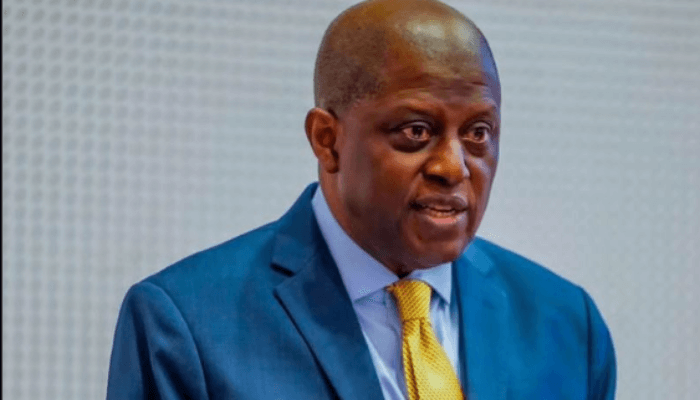
The Central Bank of Nigeria has issued the first batch of final licences to 82 Bureau De Change (BDC) operators under its stringent 2024 Regulatory and Supervisory Guidelines, marking a major step in its ongoing cleanup of Nigeria’s fragmented foreign exchange market.
The new licensing round is part of the apex bank’s tighter, compliance-driven FX framework designed to shrink the space for illegal currency traders, curb market distortions, and restore public confidence after years of parallel-market volatility.
Under the 2024 framework, the CBN introduced a tougher two-tier licensing model:
Commercial banks, payment service banks, fintechs, IMTOs, and other regulated financial institutions are now barred from obtaining BDC licences — a move aimed at preventing conflicts of interest and strengthening regulatory oversight.
Of the 82 newly approved operators, only two fall under the Tier 1 category, while 80 are Tier 2 operators restricted to operating within a single state.
In a statement signed by Hakama Ali, Acting Director of Corporate Communications, the CBN confirmed the licences took effect on November 27, 2025, under the Bank and Other Financial Institutions Act (BOFIA 2020).
The apex bank warned Nigerians to avoid transacting with unlicensed FX dealers, stating that only operators listed on its verified public database are authorised to operate.
Operating a BDC without a valid licence now attracts:
The new regime follows a turbulent period for the FX market. In 2024 alone, the CBN revoked the licences of over 4,000 BDCs for violations ranging from non-payment of regulatory fees to failure in filing anti–money laundering and counter-terrorism financing reports. That year, regulators also cracked down on street FX trading, a practice now expressly prohibited under the new rules.
Former statements from CBN officials highlighted that the reforms were designed to “bring sanity” to a sector that had drifted far from its original purpose.
The reforms come at a time when Nigeria’s official and parallel market exchange rates have converged at under ₦1,500 per dollar, a trend the CBN hopes to sustain by tightening control over one of the market’s weakest links — retail FX trading.
With the regulator continuously updating its list of approved BDC operators, Nigerians are urged to verify the status of any operator before conducting foreign exchange transactions.
 English