
The best site to get your Nigerian News, Latest News, Breaking News & Trending. From Politics, Entertainment, Sport, Education and Health.
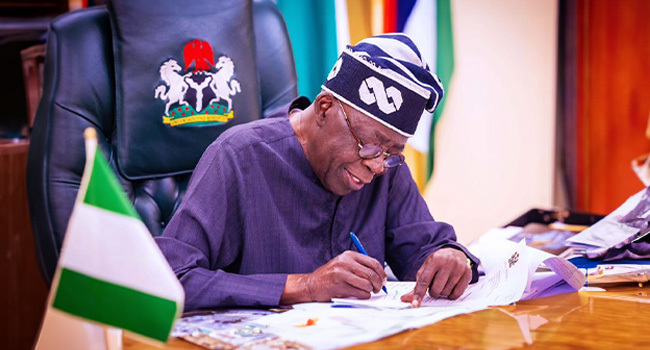
President Bola Ahmed Tinubu’s executive order directing all oil and gas revenues to be paid directly into the Federation Account has stirred deep questions and uncertainty within Nigeria’s key oil institutions. The move is aimed at improving transparency and revenue sharing among the federal, state, and local governments — but it has also raised concerns about how some agencies will continue to operate effectively under the new fiscal framework.
On February 13, 2026, President Tinubu signed a sweeping executive directive requiring that major petroleum revenues — including royalties, taxes, profit oil, and profit gas — be remitted straight into the Federation Account Allocation Committee (FAAC) for distribution across government tiers. Under this order, agencies like the Nigerian National Petroleum Company Limited (NNPC) and the Nigerian Upstream Petroleum Regulatory Commission (NUPRC) can no longer retain certain internally generated revenues on their own.
The government says this measure will strengthen fiscal discipline, reduce revenue leakages, and ensure greater transparency in how the nation’s oil and gas wealth is managed for public benefit. The Revenue Mobilisation Allocation and Fiscal Commission (RMAFC) described the order as constitutionally grounded and a major step toward improving accountability in revenue management.
However, the executive order has left some petroleum agencies worried about their future funding and independence. Industry insiders say the biggest issue is the absence of a clearly defined alternative funding system now that traditional internally collected revenues — like NUPRC’s statutory share — are directed into the federation pool.
For example, the NUPRC previously relied on a four percent cost-of-collection revenue to run its day-to-day activities, pay competitive salaries, and retain skilled staff — something crucial for a technical regulator. Critics warn that depending on annual budget approvals through the Ministry of Finance and the National Assembly might expose the commission to bureaucratic delays and reduced efficiency.
This concern is echoed across the industry, where officials fear that operational independence, monitoring, enforcement, and field inspection activities may be weakened if funding becomes more uncertain.
The shake-up has also hit NNPC, where top industry officials told reporters that production supervision, production sharing contract (PSC) oversight and other critical operations may be disrupted without clear fiscal backstops. They warn that the move could weaken investor confidence, especially for deepwater projects that rely on consistent funding and regulatory stability.
Several staff groups and labour unions are also worried about how the order might impact employment conditions, welfare packages, and job security, especially since the oil sector remains a cornerstone of Nigeria’s economy, accounting for large portions of government revenue, foreign exchange earnings, and jobs.
Not all reactions have been negative. Supporters of the executive order argue that it restores constitutional revenue principles by eliminating deductions that previously reduced net inflows to the federation account and hindered equitable sharing. Advocates say this reform should provide predictable revenue flows to the three tiers of government and strengthen macroeconomic stability — if managed carefully.
The Minister of State for Finance and FAAC Chairman, Mrs. Doris Uzoka-Anite, said the measure strengthens revenue discipline and may broaden distributable revenue, though she cautioned that rapid surges in inflows could also create inflation and monetary challenges if not handled with care.
 English