
The best site to get your Nigerian News, Latest News, Breaking News & Trending. From Politics, Entertainment, Sport, Education and Health.
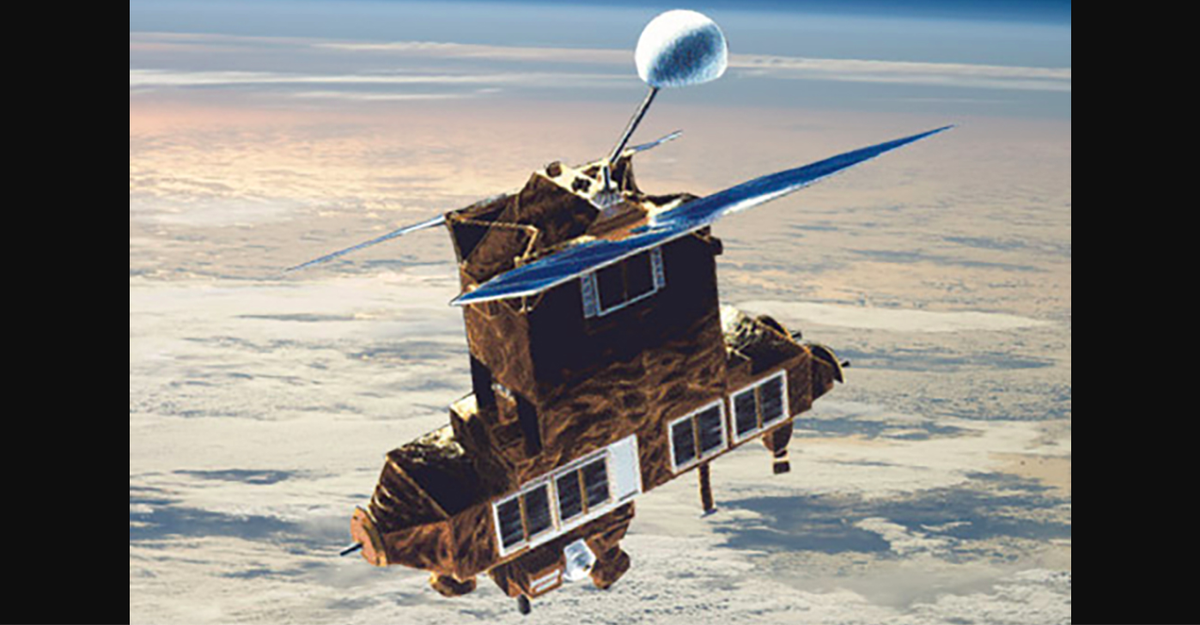
The NASA Van Allen Probe A reentry is drawing global attention as the 1,300-pound spacecraft prepares to make a fiery return to Earth after more than a decade in orbit.
The satellite, which played a crucial role in studying Earth’s radiation environment, is expected to reenter the planet’s atmosphere around March 10, 2026, according to tracking by NASA and the U.S. Space Force.
Although the spacecraft will plunge back toward Earth at high speed, scientists say there is very little risk to people on the ground.
The spacecraft involved in the NASA Van Allen Probe A reentry is one of two satellites launched in 2012 as part of a mission to study the mysterious radiation belts surrounding Earth.
These radiation zones, known as the Van Allen belts, contain high-energy charged particles trapped by Earth’s magnetic field. Scientists have long studied them because they influence space weather and can affect satellites, astronauts, and communication systems.
The two spacecraft — Probe A and Probe B — were originally called the Radiation Belt Storm Probes before being renamed in honor of space scientist James Van Allen.
Key mission facts:
Although the mission was initially designed to last only two years, the probes continued collecting valuable data for about seven years before they were shut down after running out of fuel.
The upcoming NASA Van Allen Probe A reentry is happening because the spacecraft has gradually lost altitude since it was deactivated in 2019.
Without propulsion to maintain its orbit, atmospheric drag slowly pulled the satellite closer to Earth.
Solar activity has also played a role in speeding up the process. Increased solar radiation causes the upper atmosphere to expand, which increases drag on satellites and accelerates orbital decay.
Originally, scientists predicted the spacecraft would not reenter Earth’s atmosphere until around 2034, but stronger solar activity shortened that timeline significantly.
When the NASA Van Allen Probe A reentry occurs, the spacecraft will enter Earth’s atmosphere at extremely high speed.
As the satellite descends, friction with atmospheric gases will generate intense heat.
This process, known as atmospheric entry, often causes spacecraft and debris to burn up completely before reaching the ground.
NASA expects most of the satellite to disintegrate during reentry, although some small pieces may survive the fiery descent.
Despite alarming headlines about a “satellite crash,” experts say the risk to humans from the NASA Van Allen Probe A reentry is extremely low.
NASA estimates the chance of debris injuring someone on Earth at about 1 in 4,200, which is considered minimal.
Several factors make serious danger unlikely:
Historically, injuries caused by falling space debris are extremely rare.
In fact, only one widely documented case exists — in 1997 when a woman in the United States was lightly struck by a small piece of space debris but was not injured.
Although its return marks the end of its journey, the spacecraft leaves behind a significant scientific legacy.
During its mission, the Van Allen probes made several groundbreaking discoveries about Earth’s radiation environment.
Among the key findings:
These discoveries have helped scientists better protect spacecraft and astronauts operating in Earth’s orbit.
The upcoming NASA Van Allen Probe A reentry will not mark the end of the entire mission.
Its twin spacecraft, Van Allen Probe B, is still orbiting Earth and is expected to remain in space until around 2030 or later before eventually reentering the atmosphere as well.
Both satellites were designed to work together, allowing scientists to compare data from two points in space simultaneously.
The return of this satellite also highlights a broader issue facing the space industry: space debris.
Thousands of inactive satellites and fragments currently orbit Earth, posing potential risks to operational spacecraft.
While most small objects burn up harmlessly during atmospheric reentry, larger objects sometimes leave surviving debris.
As space launches increase globally, experts say managing orbital debris will become increasingly important.
The NASA Van Allen Probe A reentry marks the dramatic conclusion of one of NASA’s most successful scientific missions focused on Earth’s space environment.
After nearly 14 years in orbit and seven years of active research, the spacecraft’s final journey back to Earth symbolizes the life cycle of many satellites — launch, discovery, and eventual reentry.
Even as it burns up in the atmosphere, the knowledge it provided continues to shape how scientists understand space weather and protect technology in orbit.
 English