
The best site to get your Nigerian News, Latest News, Breaking News & Trending. From Politics, Entertainment, Sport, Education and Health.
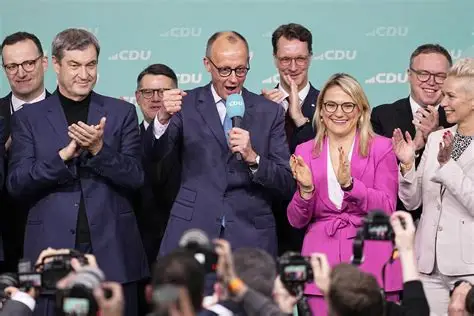
On a tense election night in Munich, something extraordinary happened — something few political observers truly believed was possible.
For decades, the city had been a stronghold of the Social Democratic Party (SPD), a political fortress that seemed almost impossible to breach. But as the final votes were counted and the numbers flashed across screens, the reality became undeniable:
Dominik Krause had done the unthinkable.
The Green Party candidate defeated long-time mayor Dieter Reiter, ending an era of SPD dominance and sending shockwaves across Germany’s political landscape.
What unfolded wasn’t just an election. It was a political earthquake.
The atmosphere inside Munich’s election centers was electric. Supporters gathered, phones in hand, refreshing results, whispering predictions, hoping — or fearing — what might come next.
Early numbers hinted at a tight race. But as the night progressed, a pattern began to emerge: Krause was not just competing — he was leading.
For many SPD loyalists, disbelief quickly turned into anxiety. Could the party that had governed Munich for decades really lose its grip?
By the time the final results were announced, the answer was clear.
Munich had chosen change.
For Dieter Reiter, the defeat marked a dramatic and emotional turning point.
A veteran politician and long-serving mayor, Reiter had come to symbolize stability and continuity in Munich’s governance. Under his leadership, the city had maintained its reputation as one of Germany’s most prosperous and well-managed urban centers.
But in politics, longevity can be both strength and weakness.
As frustrations grew over housing affordability, climate policies, and urban development, many voters began to question whether continuity was still enough.
In a rare moment of candor, Reiter reportedly admitted after the loss:
“I messed it up.”
It was a stark, human acknowledgment of a political reality — that even the most established leaders are not immune to change.
If Reiter represented the old guard, Dominik Krause embodied something different.
Young, energetic, and deeply aligned with issues that resonate with modern urban voters, Krause built his campaign on a message of transformation.
His platform focused on:
But beyond policies, it was his tone that connected.
Krause didn’t campaign as a distant politician — he presented himself as part of a new generation ready to reshape the city’s future.
And Munich listened.
Elections are rarely decided by a single issue. Instead, they reflect a buildup of frustrations, hopes, and shifting priorities.
In Munich, several key factors contributed to the dramatic outcome:
For years, Munich has been one of Germany’s most expensive cities to live in. Rising rents and limited housing availability have placed immense pressure on residents, particularly young professionals and families.
Many voters felt that the existing leadership had not done enough to address the crisis.
As environmental concerns grow across Europe, the Green Party has gained momentum by positioning itself as the party of the future.
Krause’s strong stance on climate action resonated with a city increasingly conscious of sustainability.
After decades of SPD control, a sense of fatigue had begun to set in.
For many voters, this election became less about rejecting the past and more about embracing a different future.
While the election was local, its implications are anything but small.
Munich is not just any city — it is one of Germany’s economic powerhouses, a hub of innovation, finance, and culture.
A political shift here sends a powerful message:
Voter priorities are changing.
Across Germany and Europe, traditional parties are facing increasing challenges from newer movements that emphasize climate action, social reform, and generational change.
Krause’s victory is part of a broader trend — one that could reshape political dynamics in the years ahead.
Behind the numbers and headlines lies a deeply human story.
For SPD supporters, the loss felt personal — the end of an era that had defined Munich for generations.
For Green Party supporters, it was a moment of validation — proof that persistence and new ideas can break even the strongest political strongholds.
And for many ordinary voters, it was something else entirely:
A reminder that their voice still matters.
Elections like this reignite belief in democracy, showing that change is always possible, no matter how entrenched the status quo may seem.
Munich’s election offers a powerful lesson, not just for Germany, but for political leaders around the world:
No position is permanent. No voter loyalty is guaranteed.
In an age of rapid change — economic, social, and environmental — citizens expect leadership that evolves with their needs.
Those who fail to adapt risk being left behind.
As the dust settles, one thing is clear:
Munich’s political landscape has been transformed.
What was once considered a safe stronghold has become a symbol of change.
What was once predictable has become uncertain.
And what once seemed impossible has now become reality.
 English