
The best site to get your Nigerian News, Latest News, Breaking News & Trending. From Politics, Entertainment, Sport, Education and Health.
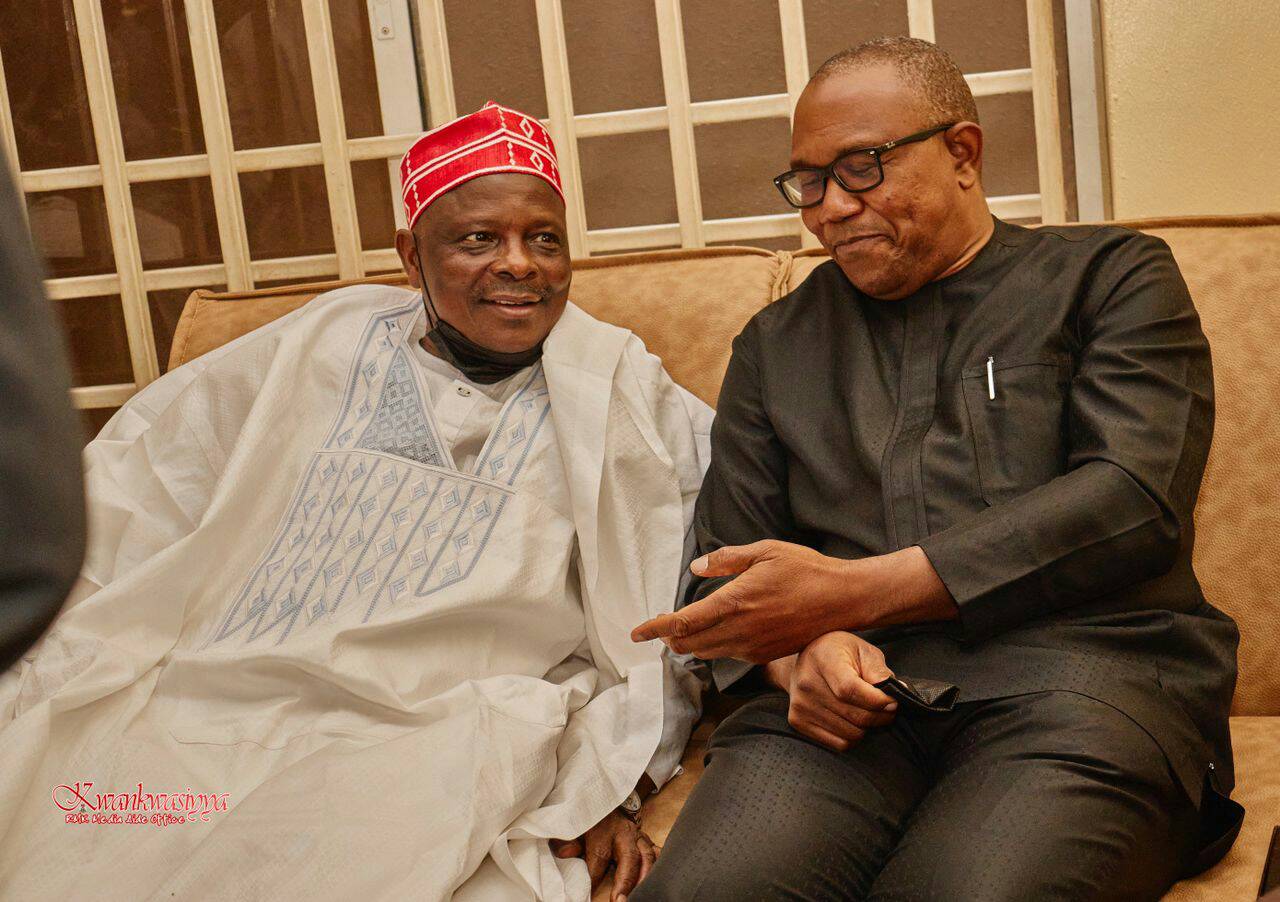
It was a typical political Sallah celebration in Kaduna — at least on the surface. Crowds cheered, flags waved, and speeches echoed through packed halls. But behind the festive energy, a quiet, strategic calculation was unfolding that could reshape the landscape of Nigeria’s 2027 presidential race.
At the center of this political chessboard are Peter Obi, the former presidential candidate; Rabiu Kwankwaso, former governor and political kingmaker; and the rising discussion of a potential Obi–Kwankwaso presidential ticket. Analysts now warn that if this alliance solidifies, it could seriously unsettle President Bola Tinubu’s re-election bid, setting up one of the most unpredictable elections in Nigerian history.
On March 2026, Peter Obi traveled to Kaduna to consult with leaders of the African Democratic Congress (ADC) and Labour Party (LP) stakeholders. Officially, it was described as an outreach tour, part of ongoing engagement ahead of the 2027 elections.
But sources suggest the consultations were far more than ceremonial. The focus: strategic alignment, grassroots mobilization, and exploring the viability of an Obi–Kwankwaso joint ticket.
Meanwhile, Kwankwaso, with his deep Northern political network, continues to be a pivotal figure. Observers note that his influence in Kano and surrounding states could tip the balance in a close race. Coupled with Obi’s strong appeal in the South and among urban voters, the partnership has the potential to create a formidable cross-regional coalition.
“This is not just optics,” says a political analyst. “If Obi and Kwankwaso formalize an alliance, it signals a serious challenge to Tinubu’s dominance, especially in Northern swing states.”
The People’s Democratic Party (PDP), Nigeria’s main opposition party, is in turmoil. Reconciliation efforts have stalled, internal factions are clashing, and distrust runs deep among top leaders.
For Obi, who has historically positioned himself as an independent reformist, this is both a challenge and an opportunity. With the PDP fractured, a strong Obi–Kwankwaso ticket could attract voters disillusioned with traditional party structures.
Analysts point out:
In other words, the stakes of this meeting go far beyond Kaduna’s festive backdrop — it is a strategic maneuver with nationwide implications.
Rabiu Kwankwaso is more than a former governor; he is a power broker in Northern Nigeria. His political movement, often referred to as Kwankwasiyya, commands loyal grassroots followings, particularly in Kano and neighboring states.
In a presidential election where regional dynamics are crucial, securing Kwankwaso’s backing is no small feat. Analysts say:
“Control over northern votes can decide the 2027 election. Kwankwaso’s inclusion gives any candidate immediate legitimacy and reach in a critical region.”
When paired with Obi’s southern popularity and urban voter appeal, the ticket could bridge historically divided political bases — a combination that has the potential to reshape Nigeria’s political map.
Despite the excitement around an Obi–Kwankwaso ticket, there are tangible challenges. Reports indicate that low membership registration among Igbo voters in the ADC could impact Obi’s ability to secure the party’s presidential nomination. (dailypost.ng)
This is a critical issue, given Obi’s core support base in the South-East. Party insiders suggest that unless registration numbers increase dramatically before primaries, Obi may face procedural hurdles to running under the ADC banner.
Political strategist Chinedu Okafor notes:
“This is not just a bureaucratic issue. If Igbo membership doesn’t rise, it could jeopardize Obi’s path to a legitimate candidacy — even if the Obi–Kwankwaso alliance gains traction elsewhere.”
This tension illustrates a larger theme in Nigerian politics: alliances are only as strong as the party structures that support them.
Obi’s recent visits to Kaduna were more than symbolic. He met with ADC and LP stakeholders to:
Observers note that Obi’s approach reflects less transactional politics and more coalition-building, an effort to create a cross-party, cross-regional movement capable of challenging Tinubu’s incumbency.
In the words of one Kaduna-based political observer:
“This is the first time we see Obi engaging so strategically outside his base. Every handshake, every consultation, is part of a larger plan for 2027.”
 English