
The best site to get your Nigerian News, Latest News, Breaking News & Trending. From Politics, Entertainment, Sport, Education and Health.
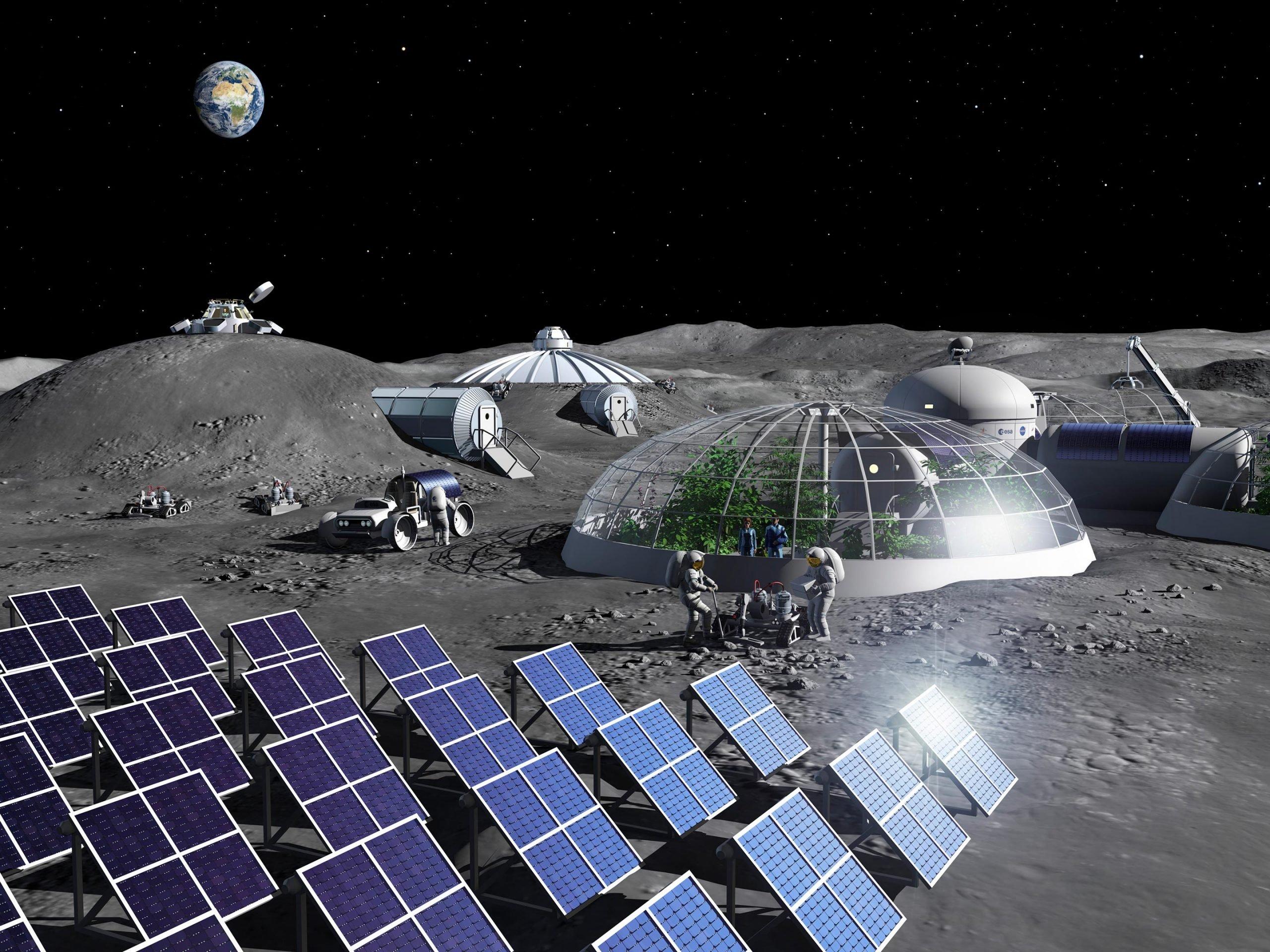
The Moon is no longer just a symbol of wonder.
It is now a battlefield.
Not with weapons—but with technology, ambition, and power.
And in 2026, the race has officially begun again.
For decades after the last footsteps of Apollo astronauts faded into history, the Moon sat quietly—distant, untouched, almost forgotten.
But not anymore.
Today, the world’s most powerful nations are rushing back—not just to visit, but to stay.
The mission is no longer symbolic.
It is strategic.
And at the center of it all lies one location that could determine the future of space exploration: the lunar south pole.
This isn’t about planting flags anymore.
This is about control, resources, and dominance in the next frontier.
Scientists believe the Moon’s south pole holds something priceless: water ice.
That changes everything.
Because water means:
In simple terms, whoever controls that region could control the future of space exploration itself.
And both the United States and China know it.
The United States isn’t just planning to return to the Moon—it wants to live there.
Under its evolving Artemis program, NASA is now pushing toward building a permanent lunar base, shifting away from earlier orbital station plans.
The goal?
This isn’t exploration.
This is colonization—carefully designed, technologically advanced, and massively expensive.
A reported $20 billion investment signals just how serious the plan is.
And behind that investment is a clear message:
The U.S. does not intend to lose space dominance.
While America pushes forward loudly, China is advancing steadily—and quietly.
Its plans are equally ambitious:
China is even preparing a complex mission—Chang’e-7—to land near the lunar south pole and search for water.
And here’s the key difference:
China is not rushing.
It is executing.
Step by step. Mission by mission.
And that patience may be its biggest advantage.
This isn’t just about who gets there first.
It’s about who builds the future first.
Because the Moon is more than a destination—it’s a launchpad.
From the Moon, humanity can:
In many ways, the Moon is the gateway to everything that comes next.
And whoever controls that gateway… controls the timeline of human expansion into space.
But this race isn’t just between countries anymore.
Companies are now major players.
Private firms are:
This shift is transforming space into a hybrid battlefield—where governments and corporations work together, compete, and sometimes clash.
It’s no longer just a national mission.
It’s an economic one.
Landing on the Moon is hard.
Living there?
That’s something else entirely.
Engineers face extreme challenges:
Every system must be:
Space exploration is now considered one of the most complex engineering challenges humanity has ever attempted.
And solving it will redefine technology on Earth as well.
 English