
Clinical Evaluation of Dietary Substrate Integration in Gastrointestinal Motility, Mucosal Integrity, and Microbiome Homeostasis

Abstract
Dietary composition represents a primary environmental driver of gastrointestinal architecture, luminal transit velocity, and bacterial community structure within the human gut. According to clinical observations articulated by Dr. Vo Ngoc Diem of the Department of Gastroenterology at the Endoscopy and Gastrointestinal Endoscopic Surgery Center, Tam Anh General Hospital (Ho Chi Minh City), targeted nutrient selection plays a central role in optimizing gastric emptying, strengthening the mucosal barrier, and preventing functional gastrointestinal disorders[cite: 1]. This paper examines the physiological mechanisms underlying ten key dietary interventions recommended for daily gastrointestinal regulation[cite: 1].
Introduction & Pathophysiological Context
The human gastrointestinal tract functions as a dynamic interface coordinating enzymatic digestion, nutrient absorption, neuro-muscular motility, and immune surveillance[cite: 1]. Perturbations in luminal dysbiosis, systemic inflammation, or structural degradation of the epithelial barrier frequently manifest as functional dyspepsia, irritable bowel syndrome (IBS), or chronic constipation[cite: 1].
Clinical consensus emphasizes that targeted dietary substrates can directly modulate these pathways[cite: 1]. By strategically introducing high-solubility fibers, exogenous digestive enzymes, immunomodulatory lipids, and live probiotic cultures, clinicians can favorably shift the luminal microenvironment toward anti-inflammatory homeostasis[cite: 1].
Mechanistic Analysis of Recommended Dietary Interventions
1. Ipomoea batatas (Sweet Potato)
Sweet potatoes deliver significant concentrations of soluble dietary fiber alongside resistant starch[cite: 1]. Upon reaching the distal colon, resistant starch undergoes anaerobic bacterial fermentation, yielding short-chain fatty acids (SCFAs) such as acetate, propionate, and butyrate[cite: 1]. These SCFAs serve as the primary energetic substrate for colonocytes, preserving mucosal epithelial integrity while promoting stool hydration and regular propulsive peristalsis[cite: 1].
2. Cultured Fermented Milk (Yogurt)
Exogenous administration of probiotic bacterial strains—predominantly Lactobacillus and Bifidobacterium species—aids in restoring microbial density following dysbiosis[cite: 1]. Regular consumption enhances proteolysis, attenuates luminal gas accumulation (bloating), fortifies the intestinal mucosal barrier, and mitigates symptomatic distress associated with IBS[cite: 1].
3. Ripe Musa spp. (Bananas)
Ripe bananas contain significant quantities of non-digestible oligosaccharides, specifically inulin and resistant starches, which act as prebiotic matrices[cite: 1]. These compounds soothe gastric mucosal surfaces, attenuate acid-mediated irritation, and normalize intestinal transit time, making them advantageous for patients presenting with gastroesophageal reflux or intestinal hyper-reactivity[cite: 1].
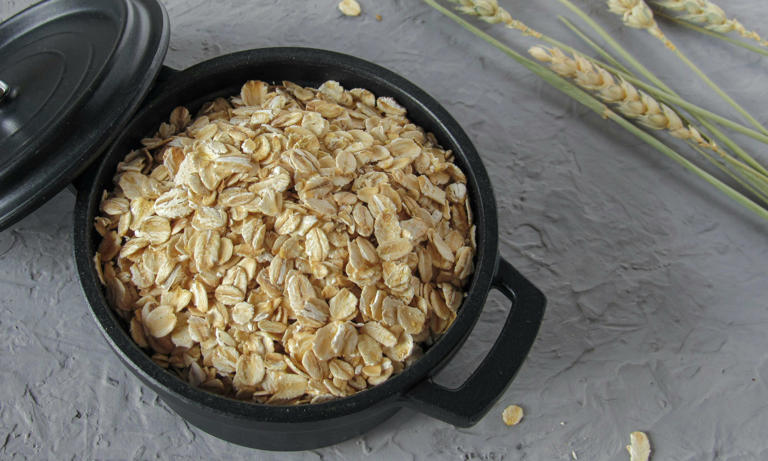
4. Avena sativa (Whole Oats)
Whole oats feature high concentrations of the soluble non-starch polysaccharide beta-glucan[cite: 1]. In the lumen, beta-glucan forms a high-viscosity hydrogel that regulates gastric emptying rates, modulates lipid absorption, and selectively stimulates the proliferation of beneficial commensal taxa[cite: 1].
5. Ripe Carica papaya (Papaya)
Papaya contains the cysteine protease enzyme papain, which catalyzes the hydrolysis of peptide bonds in complex dietary proteins[cite: 1]. By reducing the postprandial proteolytic burden on gastric secretions, papain integration attenuates functional dyspepsia, bloating, and delayed gastric emptying[cite: 1].
6. Salmo salar (Salmon)
As a high-grade protein source, salmon provides minimal collagen-linked structural resistance, facilitating rapid gastric breakdown[cite: 1]. Furthermore, its high concentration of long-chain omega-3 polyunsaturated fatty acids (PUFAs) downregulates pro-inflammatory cytokine cascades along the enterocyte lining, favoring optimal peristaltic rhythm[cite: 1].
7. Spinacia oleracea (Spinach)
Spinach provides micronutrient concentrations of ionic magnesium and folate[cite: 1]. Magnesium acts as an essential co-factor regulating intestinal smooth muscle contraction and relaxation phases, preventing functional colonic inertia[cite: 1]. Thermally processed (steamed or lightly cooked) spinach minimizes mechanical mucosal abrasion in geriatric or convalescent populations[cite: 1].
8. Zingiber officinale (Ginger)
The bioactive gingerols and shogaols present in ginger exhibit potent prokinetic activity[cite: 1]. These compounds accelerate gastric emptying velocity, reduce intragastric pressure, alleviate nausea, and reduce smooth muscle spasms across the duodenal segment[cite: 1].
9. Malus domestica (Apple)
Apples are rich in pectin, a structural polymer that acts as a gel-forming soluble fiber[cite: 1]. Pectin demonstrates dual regulatory capacity: it increases fecal bulk to relieve constipation while simultaneously adsorbing excess luminal fluid to stabilize mild diarrheal presentations[cite: 1].
10. Curcuma longa (Turmeric)
The polyphenolic compound curcumin exerts anti-inflammatory, antioxidant, and cytoprotective effects on the gastric mucosa[cite: 1]. Curcumin modulates microbial diversity, accelerates epithelial tissue repair following peptic irritation, and lowers acid reflux severity[cite: 1].
Summary Matrix: Functional Classification & Target Pathways
| Dietary Intervention | Primary Bioactive Component | Dominant Physiological Mechanism | Target Clinical Indication |
| Sweet Potato[cite: 1] | Soluble Fiber & Resistant Starch[cite: 1] | SCFA Fermentation & Stool Softening[cite: 1] | Constipation & Mucosal Atrophy[cite: 1] |
| Yogurt[cite: 1] | Lactobacillus / Bifidobacterium[cite: 1] | Microbiota Recultivation & Proteolysis[cite: 1] | Dysbiosis, IBS & Flatulence[cite: 1] |
| Ripe Banana[cite: 1] | Inulin & Prebiotic Starch[cite: 1] | Mucosal Coating & Motility Regulation[cite: 1] | Acid Reflux & Gastric Irritation[cite: 1] |
| Whole Oats[cite: 1] | Viscous Beta-Glucan[cite: 1] | Luminal Gel Formation & Lipid Binding[cite: 1] | Delayed Emptying & Dyslipidemia[cite: 1] |
| Ripe Papaya[cite: 1] | Papain Protease[cite: 1] | Exogenous Protein Cleavage[cite: 1] | Postprandial Dyspepsia & Bloating[cite: 1] |
| Salmon[cite: 1] | Omega-3 PUFAs & Light Proteins[cite: 1] | Downregulation of Epithelial Inflammation[cite: 1] | Enteric Inflammation & Motility Impairment[cite: 1] |
| Spinach[cite: 1] | Bioavailable Magnesium & Folate[cite: 1] | Smooth Muscle Neuromuscular Support[cite: 1] | Intestinal Atony & Constipation[cite: 1] |
| Ginger[cite: 1] | Gingerols & Shogaols[cite: 1] | Acceleration of Gastric Emptying Velocity[cite: 1] | Nausea, Gastroparesis & Spasms[cite: 1] |
| Apple[cite: 1] | Pectin Polymer[cite: 1] | Luminal Fluid Viscosity Normalization[cite: 1] | Stool Instability & Mild Diarrhea[cite: 1] |
| Turmeric[cite: 1] | Curcumin Polyphenol[cite: 1] | Cytoprotection & Epithelial Repair[cite: 1] | Gastric Ulceration & Reflux[cite: 1] |
Clinical Management & Dietary Restrictions
Dr. Diem emphasizes that therapeutic dietary management requires strict exclusion criteria for cohorts presenting with chronic gastrointestinal pathologies—including Inflammatory Bowel Disease (IBD), Colitis, Gastroesophageal Reflux Disease (GERD), and IBS[cite: 1].
Conclusion
The therapeutic integration of nutrient-dense, enzymatically active, and prebiotic dietary sources offers an effective non-pharmacological approach to maintaining gastrointestinal health[cite: 1]. By tailoring substrate intake to individual physiological needs, clinicians can optimize gut microbiome architecture, enhance mucosal repair, and manage functional digestive disorders[cite: 1].



 English