
Senate Begins Scrutiny of Tinubu’s $7.7bn External Loan Request to Cover 2026 Budget Deficit

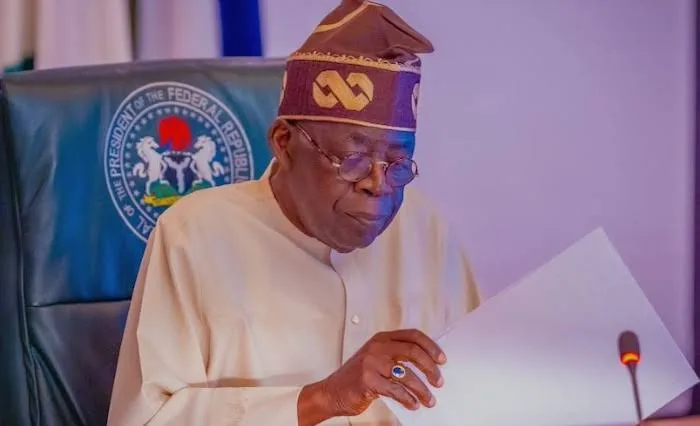
The Nigerian Senate has officially commenced the legislative review of President Bola Tinubu’s request to secure an external loan of $7.7 billion (N10.79 trillion). During Wednesday’s plenary, Senate President Godswill Akpabio referred the proposal directly to the Senate Committee on Local and Foreign Debts for thorough consideration and a prompt report.
The borrowing proposal forms a vital component of the Federal Government’s financing strategy under the 2026 Appropriation Act, designed to help bridge a projected budget deficit standing at approximately N31.4 trillion.
Breaking Down the $7.7bn Borrowing Plan
In a letter dated October 26, 2026, President Tinubu formally asked the National Assembly to approve raising N10,790,366,835,481 (equivalent to $7,707,404,882.49), calculated using the 2026 budget exchange rate of N1,400 to the dollar.
Key details of the request include:
- The New Borrowing Framework: The approved 2026 Appropriation Act authorizes N29.2 trillion in total new borrowings, split between N18.4 trillion in domestic loans and N10.79 trillion in external financing.
- Emphasis on Eurobonds: While the government plans to explore multiple funding options—including multilateral concessional loans, IMF facilities, loan syndications, and bilateral credit—President Tinubu emphasized that Eurobond issuance will take priority due to its faster processing time and capacity to raise substantial capital at competitive market terms.
- Reserves Accretion: The President noted that the foreign currency proceeds would be received by the Central Bank of Nigeria (CBN), directly boosting Nigeria’s external reserves, providing a buffer for the naira, and strengthening the country’s macroeconomic position.
Priority Sectors and Legislative Caution
According to the executive communication, the external loan proceeds will be channeled into critical developmental sectors outlined in the 2026 budget, specifically targeting:
- Defense and Security
- Infrastructure and Transportation
- Agriculture
- Power
- Education and Healthcare
While referring the matter to committee scrutiny, Senate President Godswill Akpabio urged caution and pressed the executive arm to ensure Nigeria negotiates the most favorable terms possible. He emphasized the necessity of a “win-win” approach to avoid unfavorable repayment structures that could strain the nation’s debt profile.
The Senate Committee on Local and Foreign Debts is expected to report back with its recommendations shortly, as lawmakers balance the urgent need for infrastructural financing against broader public concerns regarding debt sustainability and servicing obligations.


 English