
Midterm Shocker: How Local Backlash Against AI Data Centers Swept Democrats Into Control of Congress

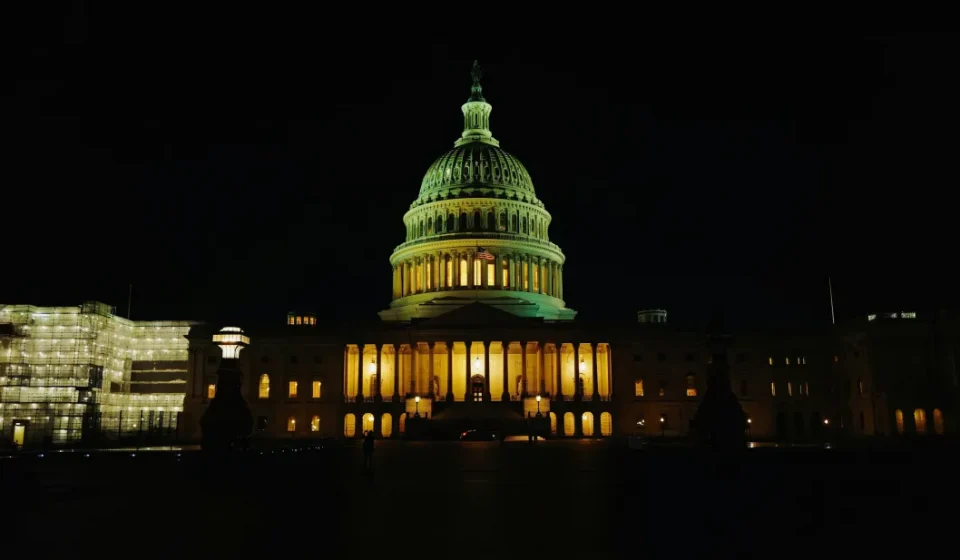
The results from the November 3 midterm elections have delivered a major political shift in Washington. Democrats have officially taken full control of the U.S. Congress, setting up a divided government with Republicans holding the White House.
While national politics took center stage, election data reveals that a surprisingly local issue became a massive political force at the ballot box: growing public anger over AI data centers.
Across the country, voters pushed back against the massive, power-hungry facilities that house the computers running artificial intelligence. With Democrats now wielding legislative power on Capitol Hill, the tech industry could soon face strict new limits on where data centers can be built and how much say local communities have over their construction.
The AI Backlash at the Polls: “Who Is This Economy Built For?”
Data centers became a defining issue for voters in several key states. According to an NBC exit poll:
- Public Anxiety Over AI: More than 50% of voters surveyed said they believe artificial intelligence will cause more harm than good.
- Not in My Backyard: Nearly 80% of respondents opposed having a data center built in their immediate neighborhood.
- A Voting Decider: Almost 60% admitted that data center developments were a major or crucial factor when deciding how to vote.
Nadine Smith, President and CEO of the civil rights group Color of Change, described the midterms as a direct vote on corporate accountability, addressing the common argument that tech infrastructure is vital for national security against rivals like China.
“National security matters,” Smith noted. “And so do the families in South Memphis breathing exhaust from the gas turbines powering an AI supercomputer.”
Big Tech’s Millions Couldn’t Stop Local Pushback
Even though pro-AI political action committees (PACs) poured millions of dollars into key races, anti-data center sentiment swept through several states:
- Ohio’s Big No: Despite OpenAI eyeing a $500 billion data center project in Ohio backed by over $100 billion from Nvidia, local communities overwhelmingly rejected data center measures. The specific county where Meta planned a 700,000-square-foot facility voted to ban data centers entirely. Financial analysts at Morgan Stanley predict Democratic Governor-elect Amy Acton will pose a major hurdle for future tech projects in the state.
- National Wave: Candidates in Texas, Maine, Michigan, Nevada, Georgia, and South Carolina won their races by running on explicit promises to slow down or halt data center expansion.
- Building Moratoriums: Financial firms like Goldman Sachs now predict widespread delays in data center construction across states like Georgia and Texas as local governments enact temporary bans.
Why People Are So Angry: Secret Deals and Rising Utility Bills
The voter pushback goes beyond the physical buildings; data centers have become a focal point for broader public anxiety over tech industry power and corporate special treatment.
For years, major tech firms used outdated zoning codes and required local officials to sign strict Non-Disclosure Agreements (NDAs), hiding multi-billion-dollar projects from local residents until construction began—as seen when Amazon built a facility in Gilroy, California. Furthermore, communities grew frustrated seeing massive corporations receive billions in local tax write-offs while local electricity bills skyrocketed to support the energy-intensive facilities.
As Nadine Smith summarized: “If AI infrastructure is truly a national priority, then the companies building it can afford to pay for their own power, meet clean air standards, disclose what they use, and build with the consent of the people who live next door. Families should never be subsidizing the richest corporations in history through their utility bills.”



 English