
The best site to get your Nigerian News, Latest News, Breaking News & Trending. From Politics, Entertainment, Sport, Education and Health.
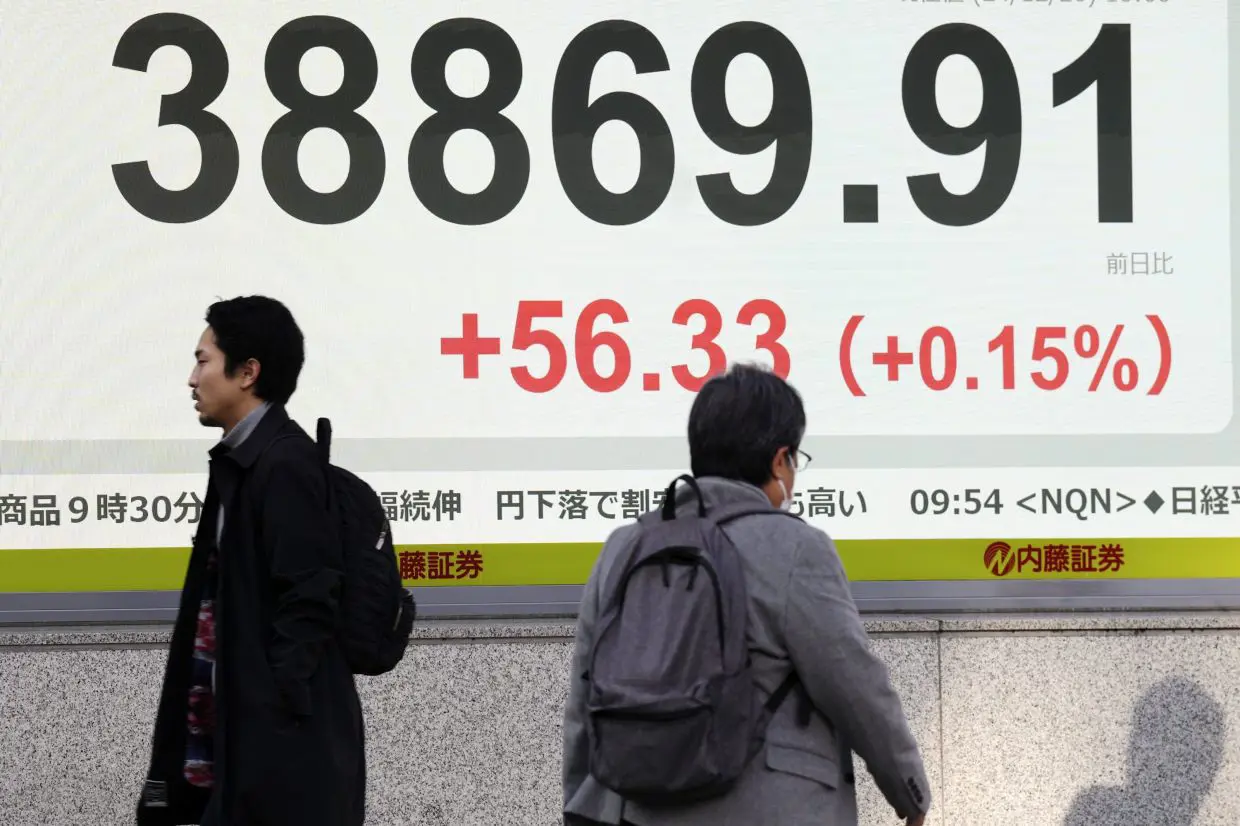
Most global stock markets fell on Friday as investors grew anxious over rising tensions between the United States and Iran, following warnings by U.S. President Donald Trump that Tehran must make a “meaningful deal” on its nuclear programme — or face serious consequences. At the same time, oil prices climbed sharply, reaching their highest levels in months, driven by fears that regional conflict could disrupt the world’s energy supply.
The outlook for markets, particularly in Asia and the United States, turned cautious as traders weighed both geopolitical risks and upcoming U.S. economic data that may shape interest rate expectations.
Equity markets across Asia weakened as the implications of U.S.–Iran tensions played out. Major indexes, including Japan’s Nikkei 225 and Hong Kong’s Hang Seng, opened lower, reflecting a mood of caution among investors. Other markets in Sydney, Wellington and Bangkok also declined, though some, like Seoul, managed modest gains.
Analysts say that geopolitical uncertainty — especially around potential military action or wider conflict — can quickly dampen investor confidence, prompting sell-offs in riskier assets like stocks.
Meanwhile, crude oil prices continued to surge as Middle East tension heightened fears of supply disruption. Brent and West Texas Intermediate (WTI) crude both climbed, with prices reaching levels not seen since mid-2025. Traders are increasingly concerned that any escalation could affect oil flows through the Strait of Hormuz, a vital route for about 20% of the world’s oil supply.
Goldman Sachs and other financial institutions have warned that oil markets may become more volatile if the situation worsens, with potential price spikes if supply routes are threatened.
President Trump used strong language at a meeting of his “Board of Peace” initiative, saying that without a nuclear deal, “bad things happen” and hinting that the next 10–15 days would be critical. While he affirmed that talks with Iranian officials continue, the U.S. has also deployed warships, fighter jets and other military assets to the region — a show of force that has added to market jitters.
Iran’s leadership has responded by warning that any attack would be met with a strong response, and the country has staged naval drills near strategic waterways, underscoring the fragile nature of the situation.
At the same time, traders were preparing for key U.S. economic reports scheduled later in the day that are expected to offer fresh insight into the strength of the world’s largest economy. Successful data could boost optimism — or, if weaker than expected, could fuel further market weakness.
 English