
The best site to get your Nigerian News, Latest News, Breaking News & Trending. From Politics, Entertainment, Sport, Education and Health.
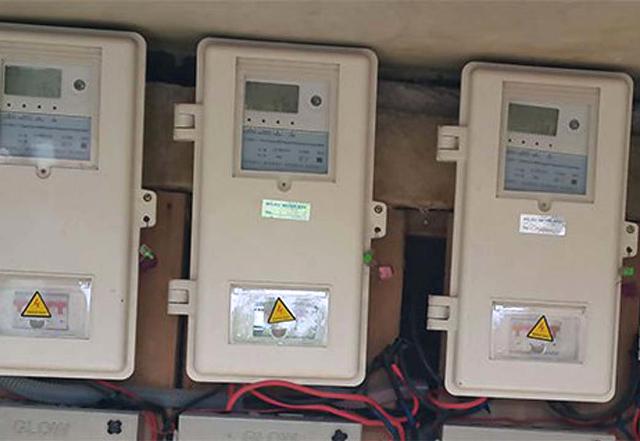
For millions of Nigerians, the simple act of flipping a light switch has become an exercise in frustration. In homes, offices, and hospitals across the country, darkness has become routine, a stark reminder of the ongoing collapse of Nigeria’s power sector.
Behind the rolling blackouts lies a web of financial woes, non-payment disputes, and political deadlock that threatens to cripple the nation’s economy and daily life.
Generation Companies (GenCos) have been sounding the alarm for months, and now their frustration has boiled over. Despite a N501 billion debt bond scheme meant to stabilize their finances, they say payments have been delayed or withheld, leaving power producers unable to invest in critical maintenance or generation upgrades. (punchng.com)
“The system is broken,” said one GenCo executive speaking under the condition of anonymity. “We generate electricity, but we are not being paid. How are we supposed to keep the lights on for Nigerians when we can’t even pay our own staff and suppliers?”
Distribution Companies (DisCos), tasked with delivering electricity to homes and businesses, are facing their own financial catastrophe. According to the latest reports, DisCos have recorded N2.4 trillion in losses over the last year — a staggering figure that explains why blackouts are worsening and maintenance is lagging behind.
While executives debate payments and bond schemes, the human toll is mounting. Lagos residents describe sweltering nights without air conditioning, students struggle to study as streetlights fail, and hospitals ration power to prioritize critical care.
In Kano, market vendors tell stories of spoiled goods as refrigeration fails, forcing them to absorb financial losses that further deepen the nation’s economic pain.
“It’s not just an inconvenience,” said Aisha Ibrahim, a mother of three in Kaduna. “We’re talking about health, business, education — every part of life is affected. When the lights go off, life stops.”
The crisis is not confined to the big cities. Smaller towns and rural communities experience prolonged blackouts, sometimes lasting days, with limited recourse. For them, electricity has become a luxury rather than a basic necessity.
In response to the mounting crisis, the government proposed a N6 trillion bailout aimed at shoring up generation capacity and stabilizing the power sector. The idea was simple: inject funds to ensure GenCos and DisCos could continue operations, pay debts, and reduce blackouts.
But the plan quickly ran into opposition. The Nigeria Labour Congress (NLC), representing electricity workers and other public employees, publicly rejected the bailout, arguing that it failed to address the root causes of the sector’s failures — including inefficiencies, corruption, and systemic mismanagement. (thecable.ng)
“Throwing trillions at the system without accountability is like pouring water into a bucket full of holes,” said one NLC spokesperson. “Until there’s transparency and efficiency, Nigerians will continue to pay for failures not of their making.”
The rejection underscores the deep distrust between labour unions, the government, and energy companies. For ordinary Nigerians, it means that short-term relief is unlikely, even as the heat, business losses, and daily disruption mount.
Experts point to a combination of factors driving the crisis:
The result? A sector trapped in a vicious cycle where even the electricity that is generated often fails to reach the consumer.
For everyday Nigerians, the crisis translates into lost income, disrupted learning, and health risks. Street food vendors rely on generators to cook; office workers struggle to meet deadlines; hospitals ration electricity, putting lives at risk.
“I can’t run my small bakery,” said Chike Obi, a business owner in Enugu. “Our generator uses fuel that is already expensive, and when the power comes back sporadically, it’s not enough. My profits are disappearing, and I can’t even pay my staff properly.”
Families, too, are adapting in creative but costly ways. Some buy solar panels, others resort to fuel-powered generators, driving up expenses for households that can barely keep up with inflation.
The electricity crisis doesn’t stop at homes — it ripples across the economy. Manufacturing plants operate below capacity, service industries suffer, and investor confidence is shaken. The cumulative effect is a slowdown in economic growth at a time when Nigeria can least afford it.
Analysts warn that unless payments to GenCos are regularized and DisCos are stabilized, energy insecurity could become a binding constraint on Nigeria’s economic development, discouraging foreign investment and increasing the cost of doing business.
 English