
The best site to get your Nigerian News, Latest News, Breaking News & Trending. From Politics, Entertainment, Sport, Education and Health.
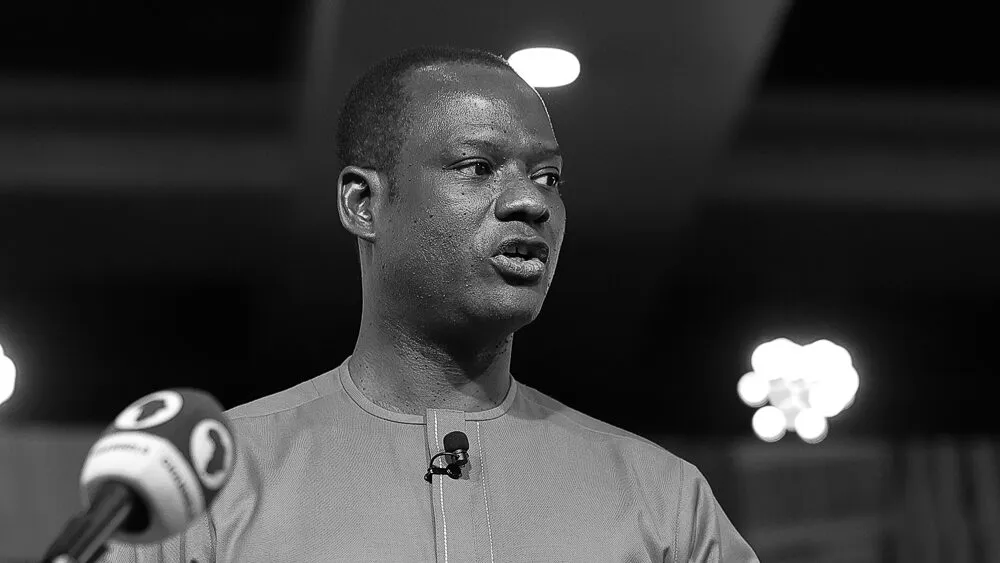
The Chairman of the Presidential Committee on Tax Policy and Fiscal Reforms, Taiwo Oyedele
The Chairman of the Presidential Fiscal Policy and Tax Reforms Committee, Taiwo Oyedele, has dismissed reports that foreign investors are frustrated or disappointed with Nigeria’s new capital gains tax (CGT), describing such claims as “misleading and inaccurate.”
Mr Oyedele made the clarification on Monday through a post on his official X (formerly Twitter) account, alleging that the media misrepresented both the reform and his recent engagement with investors.
“Public debate is vital for reform. But debate must be anchored on facts, not misrepresentation,” he wrote.
The rebuttal followed reports suggesting that investors were unhappy with the federal government’s decision to introduce a 10 per cent CGT on share sales, effective from January 2025, under the new Tax Reform Acts. The reports also alleged that Mr Oyedele had expressed a “socialist” tone during a virtual meeting with market stakeholders.
Mr Oyedele countered the claims, saying that feedback from the investor engagement tells a different story.
“A total of 281 participants attended the call from more than 10 countries,” he said.
“Contrary to claims of ‘frustration’ and ‘unease,’ about 80% of participants who gave feedback after the event rated the engagement 9 or 10 out of 10, with an overall average of 8.6. From the comments, many wished we had more time – certainly not the expected reaction of frustrated investors.”
He added that his remarks on focusing tax collection on the wealthiest 3 per cent of earners were wrongly interpreted as ideological.
“Exempting the poor while taxing the wealthy fairly is not socialism; it is progressive taxation — a principle embedded in virtually every advanced economy,” he stated.
The new CGT, part of the fiscal reforms signed into law by President Bola Tinubu in June, is designed to improve government revenue mobilisation while promoting fairness in taxation.
Under the new rule, investors who profit from share sales above a ₦150 million threshold will pay 10 per cent tax on their net gains. However, share sales below ₦150 million and profits reinvested into the market are exempt.
Mr Oyedele said the reform ensures balance by protecting small investors and promoting reinvestment.
“Both local and foreign investors benefit from exemptions based on thresholds and reinvestment. Tax applies only where those thresholds are exceeded without reinvestment. Labelling this as a punitive tax on foreign investors is misleading,” he explained.
He also noted that an absence of CGT does not make an economy more competitive, citing examples of advanced markets such as the U.S., U.K., and South Africa, which all impose capital gains taxes yet remain investor-friendly.
Mr Oyedele cautioned against what he called “intentional misreporting” by some media organisations, stressing that misinformation could distort public understanding of government reforms.
“It is troubling when reputable outlets amplify misinformation. Professional journalism demands diligence, independent verification of facts, avoidance of anonymous slurs, and distinguishing between biased opinion and credible evidence,” he said.
He reaffirmed that his committee’s goal remains to make Nigeria’s tax system simpler, fairer, and more supportive of economic growth.
The Presidential Fiscal Policy and Tax Reforms Committee, inaugurated in 2023, was tasked with overhauling Nigeria’s complex and inefficient tax framework. Its work focuses on improving non-oil revenue, streamlining taxes, and creating a structure that supports both investment and inclusion.
Analysts say the new capital gains tax marks a key step in diversifying Nigeria’s revenue base while addressing inequality, as the country seeks to strengthen fiscal discipline and reduce dependence on oil income.
 English