
The best site to get your Nigerian News, Latest News, Breaking News & Trending. From Politics, Entertainment, Sport, Education and Health.
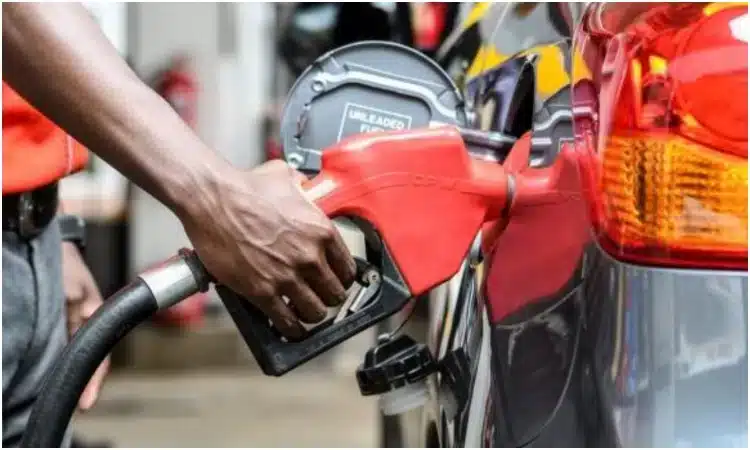
The ongoing Middle East crisis is driving fuel prices up in Nigeria, with petrol selling for up to ₦1,300 per litre and transport fares doubling in some cities.
Nigeria is once again feeling the ripple effects of global geopolitical tensions as petrol prices surge across the country following the escalating conflict in the Middle East.
In several cities, petrol is now selling for as high as ₦1,200 to ₦1,300 per litre, triggering sharp increases in transportation costs and placing additional pressure on millions of Nigerians already struggling with the rising cost of living.
The price increase comes amid growing uncertainty in global oil markets following the war involving the United States, Israel, and Iran, which has disrupted energy supply routes and pushed crude oil prices higher.
Across major cities including Lagos, Abuja, and Port Harcourt, many filling stations have adjusted pump prices upward in response to rising global oil costs.
Reports indicate that petrol now sells between ₦1,200 and ₦1,300 per litre in several locations, despite earlier efforts by domestic producers to ease pressure on the market.
The sudden spike has forced many commuters and transport operators to reconsider their daily expenses.
For ordinary Nigerians, the rising fuel price has immediate consequences: higher transportation costs, more expensive goods, and increased economic hardship.
The impact of the fuel price surge is already visible on Nigeria’s roads.
Commercial transport operators have begun raising fares significantly in response to higher petrol costs. In some areas, passengers report that transport fares have nearly doubled within days.
Daily commuters are among the hardest hit.
Workers who rely on public transportation to get to their jobs now face increased spending on transport, further reducing their disposable income.
Many transport unions argue that the fare increases are unavoidable because fuel remains the largest operational cost for drivers.
The Federal Government has acknowledged the rising petrol prices but insists that the situation reflects global market conditions rather than domestic policy failures.
Officials say the current fuel prices are a result of international crude oil fluctuations and supply disruptions caused by the ongoing Middle East conflict.
According to government representatives, Nigeria should actually be thankful for the country’s growing refining capacity, which they believe will eventually help stabilize prices in the long term.
They pointed to the expansion of local refining efforts, particularly the role of the Dangote Refinery, as a positive development for Nigeria’s energy independence.
Earlier reports indicated that the Dangote Refinery had reduced its petrol price, raising hopes that pump prices across the country would fall.
However, despite the price adjustment, many filling stations continue to sell petrol at around ₦1,300 per litre.
Industry analysts say several factors may explain the gap between refinery price reductions and pump prices at retail stations, including:
As a result, the benefits of the refinery’s price reduction have yet to fully reach consumers.
The root cause of the current fuel price surge lies far beyond Nigeria’s borders.
Tensions in the Middle East have intensified following the conflict between the United States and Iran, with Israel also deeply involved in the military campaign.
The war has raised serious concerns about disruptions to oil supply, particularly around the Strait of Hormuz, one of the world’s most important shipping routes for crude oil.
Roughly 20 percent of global oil shipments pass through this narrow waterway, making it extremely sensitive to military conflict.
Any threat to shipping in the region can trigger immediate spikes in global oil prices, which ultimately affect fuel prices worldwide, including in Nigeria.
For many Nigerians, the rising fuel price adds to an already difficult economic environment marked by inflation, high food prices, and currency volatility.
Businesses that rely on transportation are also feeling the strain.
Higher fuel costs mean increased expenses for logistics, delivery services, and manufacturing operations. In many cases, these additional costs are passed on to consumers through higher prices for goods and services.
Economists warn that if global oil prices continue to climb due to the Middle East conflict, Nigeria could experience further fuel price increases in the coming weeks.
 English