
The best site to get your Nigerian News, Latest News, Breaking News & Trending. From Politics, Entertainment, Sport, Education and Health.
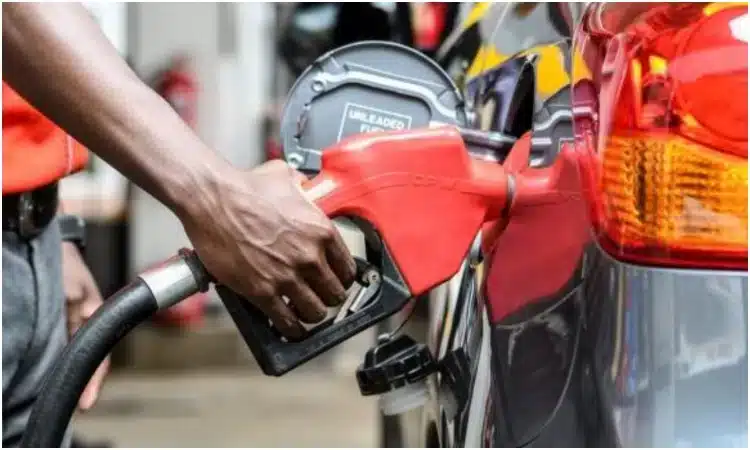
A petrol price war in Nigeria’s downstream petroleum sector has intensified, with several filling stations now selling Premium Motor Spirit (PMS) below the N739 per litre benchmark set by the Dangote Petroleum Refinery.
The competition follows a major price cut by the Dangote refinery in December, when the ex-gantry price of petrol was lowered from around N900 to N699 per litre for bulk buyers. The refinery then encouraged its retail partner, MRS Oil, to cap pump prices at N739 per litre nationwide.
Despite that, recent market surveys reveal that some retail outlets are now offering petrol at rates lower than N739 in a bid to attract motorists and stay competitive. Examples of observed prices include N735 per litre at SAO stations, N737 at Akiavic, N738 at NIPCO outlets, and N736 at an AP station near an MRS outlet in Ogun State.
Industry players say intense price competition has returned as marketers monitor rivals’ pricing and adjust in real time, with motorists gravitating toward the cheapest petrol pumps.
According to the Major Energies Marketers Association of Nigeria, the average landing cost of imported petrol is about N762.38 per litre, compared with the Dangote refinery’s ex-gantry price of N699 per litre. Despite this cost gap, some operators have opted to sell petrol below cost to retain market share.
The price war has placed pressure on both importers and local suppliers, with losses reportedly running into billions of naira for players across the sector. Marketers insist their pricing strategies are aimed at capturing customers, not at undermining any competitor.
The surge in competition traces back to the Dangote refinery’s December reduction of petrol prices, which prompted motorists in Lagos and Ogun states to favour outlets offering the lower rates, leading to queues at MRS stations. However, as competitors begin offering even lower prices, the advantage previously enjoyed by MRS is starting to shift.
Industry stakeholders, including the Independent Petroleum Marketers Association of Nigeria (IPMAN), say that market forces — demand and supply — are now determining pricing, and that stations refusing to reduce prices risk losing customers as bank interest and operational costs accumulate.
In response to the competitive dynamics, the Dangote refinery has highlighted its efforts to broaden supply access, stating that it has scaled up the volume of petrol available to marketers and reduced minimum purchase requirements to support wider distribution and enhance liquidity.
The refinery reaffirmed its commitment to reliable supply, transparency, and a competitive downstream petroleum market, stressing that expanded local refining capacity could help moderate prices, conserve foreign exchange, and strengthen long-term energy security in Nigeria.
 English