

If there is one thing government agencies and corporations are about to find out, it’s that the Federal Government is no longer smiling when it comes to how public funds are spent.
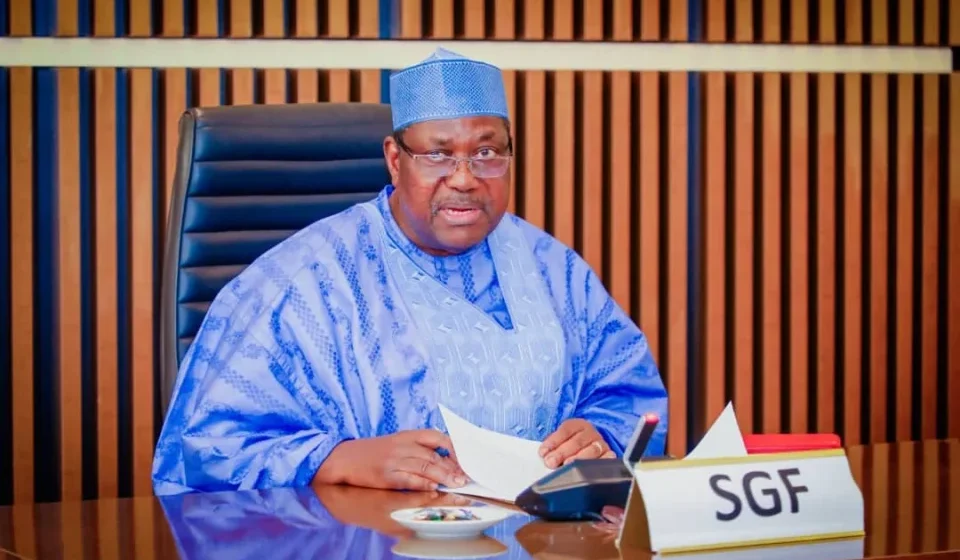
In a heavy-handed directive that has sent shockwaves through ministries, departments, and parastatals, the Secretary to the Government of the Federation (SGF), George Akume, has dropped a sledgehammer on the notorious syndrome of inflated public contracts and procurement gymnastics.
The message from the highest office is clear: play by the rules, or prepare to face severe sanctions.
Why the SGF is Drawing the Line
For a long time, several government-owned enterprises, corporations, councils, and commissions have operated like independent islands—awarding multi-billion-naira contracts without recourse to the Public Procurement Act, 2007, or its 2020 amendments.
According to the SGF’s latest circular, this rogue procurement style has created a messy trio of problems:
- Inflated Contract Sums: Projects costing way above established pricing benchmarks.
- Exclusive “Camps”: Creating captive markets for preferred contractors while locking out fair competition.
- Zero Oversight: A complete lack of regulatory supervision by bodies like the Bureau of Public Procurement (BPP).
Akume made it clear that this casual attitude toward public funds is officially over, warning that accounting officers—who are primarily the heads of these institutions—will bear personal responsibility for any violations.
No More “Backdoor” Variations
This new warning ties neatly into a broader offensive launched by the Federal Government to block every financial leak in the system.
Earlier in 2026, the BPP put a strict halt on MDAs processing upward revisions of contract sums without proper clearance. Gone are the days when contractors and agencies could use “project variations” and scope creeps as a backdoor to inflate costs. Under current guidelines, every single request for a price variation must go through the BPP’s price intelligence microscope, regardless of the amount involved.
And the proof is in the numbers: BPP Director-General Dr. Adebowale Adedokun recently revealed that these stringent price intelligence and benchmarking initiatives have saved the Federal Government a staggering N1.4 trillion over an 18-month period by simply forcing contractors to moderate outrageous bids.
Who is on the Watchlist?
The SGF’s circular didn’t just target a few minor agencies—it went straight to the top of Nigeria’s institutional food chain.
Copies of the compliance warning were dispatched to:
- The Chief of Staff to the President, National Security Adviser, and service chiefs.
- Ministries, permanent secretaries, and extra-ministerial departments.
- Major anti-corruption and regulatory bodies, including the EFCC, ICPC, and the Central Bank of Nigeria (CBN).
- Heads of the judiciary, the National Assembly, and federal commissions.
The Bottom Line for Public Servants
Accounting officers have been ordered to engage directly with the BPP for guidance and ensure immediate compliance. For any public official thinking they can sneak a bloated contract past the finish line, the warning is simple: the rules have changed, transparency is mandatory, and the consequences for defiance will hit hard.



 English