
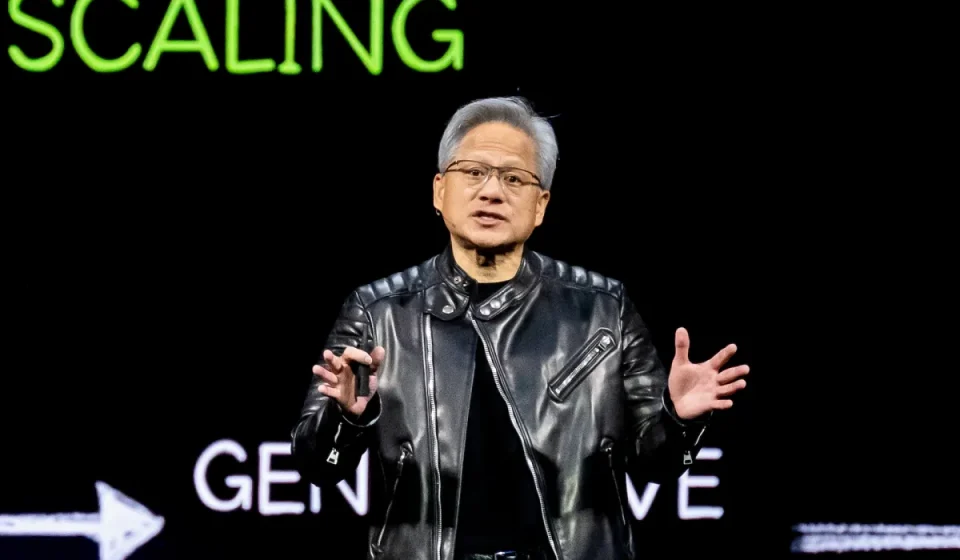
Washington Explodes Over Nvidia Scandal: Democrats Probe Trump’s China Chip Deal After CEO Jensen Huang’s Ouster

The fallout from Nvidia founder Jensen Huang’s dramatic exit has escalated into a full-blown Washington political crisis, with senior Democratic lawmakers launching an investigation into the Trump administration’s controversial approval of advanced AI chip sales to China.
The probe follows a tumultuous Thursday, November 12, 2026, in which Nvidia’s board ousted Huang after 33 years at the helm—appointing Chief Financial Officer Colette Kress as interim CEO—amid mounting revelations regarding his extramarital affair with an alleged Chinese intelligence operative and subsequent reports of additional workplace affairs. Shortly after stepping down, Huang agreed to testify behind closed doors before a separate coalition of Republican-led House committees that had threatened him with a subpoena.
Inside the “Unconstitutional” Chip Export Arrangement
In a sharply worded preservation letter sent to Commerce Secretary Howard Lutnick, House Ways and Means ranking member Rep. Richard Neal (D-Mass.) and Senate Finance ranking member Sen. Ron Wyden (D-Ore.) demanded all internal records surrounding what they characterized as a legally dubious and potentially unconstitutional export scheme.
According to the lawmakers, the arrangement allowed Nvidia to sell its Taiwan-manufactured H200 AI chips to Chinese firms by first routing the hardware through the United States for security clearance. Upon arrival on U.S. soil, President Donald Trump invoked Section 232 national security tariff authority to slap a 25 percent levy on the shipments—effectively collecting a federal revenue cut on the exports before the Commerce Department granted final export licenses. While Nvidia and AMD had previously agreed in August 2025 to share 15 percent of China-bound chip revenues with Washington, lawmakers argue the Section 232 routing mechanism operates as an unlawful export tax.
Intelligence Warnings, Shell Companies, and $26 Million in Donations
Beyond constitutional concerns, Neal and Wyden zeroed in on glaring national security lapses at the Commerce Department. The lawmakers questioned why Secretary Lutnick continued approving chip sales to Singapore-based Nvidia customer Megaspeed—and reportedly halted a federal smuggling probe into the firm following outreach from Nvidia—even after U.S. intelligence officials warned him that Megaspeed executive Alice Huang was suspected of spying for Beijing and was romantically involved with Jensen Huang.
The inquiry further flagged Commerce Department approvals granted to Chinese “cutout” companies with military ties that maintained no physical presence at their registered business addresses. Compounding the controversy, the letter scrutinized the timing of $26 million in donations from Nvidia toward President Trump’s personal and White House projects, including a new ballroom, questioning whether knowledge of Huang’s compromised position was leveraged during negotiations. The scrutiny coincides with Trump’s recent remarks during a 60 Minutes interview, where he boasted that an unnamed AI executive “totally changed” his stance after Trump and his team threatened him with prison.
With Democrats poised to retake committee gavels and subpoena power in January following recent midterm gains, alongside parallel probes from the House Select Committee on the Chinese Communist Party, Foreign Affairs, and Intelligence committees, the intersection of Silicon Valley power, foreign espionage, and White House trade deals faces intense bipartisan reckoning.


 English
[…] Foreign Affairs Committee Chairman Brian Mast announced the agreement, confirming that Huang will testify prior to the Thanksgiving holiday. The high-stakes appearance comes directly on the heels of […]